
Things I Learned Riding South and FAQ
Things I learned on this trip
There were so many highlights along this trip:
Mayan Ruins in Mexico and Guatemala
The Panama Canal
the deserts of Peru
Puno, Uros, Lake Titicaca
Northern Chile
Tortel
The Carratera Austral to Villa O’Higgins,
El Chalten,
Perito Moreno
Cerro Castillo in Torres de Paine
Punta Arbol (the end of the continent road in Chile)
The penguins at Reserva Natural Pinguino Rey
Caleta Maria (the end of the road in Chile on Tierra del Fuego)
Rodeos in Cerro Sombrero
Ushuaia
Calea Olivia, Camarones, Las Grutas, Mar del Plata, Buenos Aries
I have made so many great friends. Specifically, Robert, Jimmy and FernandoF are the most amazing men I have ever known. The combination of Motorcyles + Adventure makes a tight filter for great people.
With so many positive experiences and having seen so much great country, I can say that Every Single Day was better than the previous day.
Things to remember
Here is a list of things that I don't want to forget if I do this trip, or another like it, again. I have been updating this list as I think of new things:
- Every border crossing will take 1/2 of a passport page. When you get down to 2 to 4 remaining pages, depending on the country, the only place you can go is back home. Plan on 16 to 22 border crossings depending on how many times you cross between Chile and Argentina and if you visit Bolivia and Brazil. So you will need 9 to 8 to 11 blank pages in your passport plus the two held in reserve. Before you leave, get a new passport with 52-pages not the standard 28-pages. It will be one less thing to worry about.
- Shots: you will (may) need Yellow Fever to transit Nicaragua. If you are over 60, a note from your doctor mentioning that you are not eligible will work. You might be able to have a riding buddy write you a note and get away with it. However, if you are young, you probably should get the shot. Once and done.
- Never ride at night. Never make plans that require you to ride a night. Don't rush the trip. Take setbacks as opportunities. Never ride at night. If you find yourself riding at dusk, stop and setup your tent and camp. Never ride at night.
- You can't take a drone or binoculars through Nicaragua. They will search your luggage and X-Ray it. They appeared to be serious. No drones.
- When you transit from Mexico to Colombia or Colombia to Mexico have crisp, brand new USA money in these denominations: 10@ $5, 10@ 10$, 5@$20. Have 8 copies of your passport, motorcycle title and registration. You will need these for the border crossings.
- For Mexico and Central America, you want as narrow of bike as possible. So soft luggage may be better to lane split with.
- Only take quality tools. I would take a spare thin tube that will fit front and back. You do need a compressor. You will sleep better if you have a jump starter. You should have the tools required to check/adjust your valves. You will need a new chain and sprockets along the way. You will probably end up installing the chain yourself so carry a Chain Breaker (Motion Pro is best). Make sure you have a spark plug socket for your bike. Make sure you have a wrench big enough to remove the rear wheel, no matter how tight the previous mechanic tightened it.
- I would not take tire irons, or the Baja tire changer kit. There are tire shops everywhere, except where you need them. You will be able to get tubes everywhere except where you need them.
- Start with a new motorcycle battery, but not a Lithium-Ion battery as you can't fly with it across the Darien Gap.
- Take two cell phones, one as a backup. Take the little tool to change SIM cards. You want cell phones with the best possible camera. You are going to ride a lot of gravel so make sure your cell phone mount is top quality. I had no problems, but most of the riders around me fought cell phone mounts and camera mounts. Over six months, I saw 3 phones destroyed because the mounts failed, phones hit the ground and got run over.
- I did not take, but would take a really good external battery for cell phone. It will be needed for picture taking on long days. I would definitely take a small USB speaker.
- You will ride in the rain, so an inductive charger will keep you from having to use a USB cable in the rain.
- Take a small first aid kit. Take bug repellent, you will need bug spray to visit ruins. Take a ball cap. Take a small spray bottle and a washcloth in your tank bag to clean your visor.
- Start out with new tires, front and rear. It is a pain in the ass to purchase tires and you will never get what you want.
- Start out with a spare oil filter for your bike. Try to buy them with each oil change so you can keep your spare.
- Assume that you won't be able to purchase ANYTHING outside of the USA. If an item is difficult to get in the USA or must be purchased from Amazon, you probably won't find it. MercadoLibre works, but delivery timing won't be to your liking.
- Take a cable lock to lock your jacket and helmet to the bike so you can leave them in a parking lot. I also have a Monimotor and it worked well, other than the batteries that it requires are not available in South America.
- Take new, high quality clothes. They may last 6-months. You will not be able to find clothes that you like, that fit you. I think three short sleeve tee shirts, one long sleeve tee shirt, two nicer lightweight shirts, two long pants, belt at adjustment midpoint so you can gain or loose weight, one short pants, one fast dry bathing suit, 6 thick socks, 6 compression boxer with fly, one pair of quality hiking shoes, a ball cap and a bath towel.
- Less stuff is better. I did not need my Baja tire iron. I did not need the Starlink Mini, but I would take it, especially in Argentina. I am going to try to rig so always on. I would not take a drone.
- I would take enough stuff to boil water, a Thermos, mate kit, instant coffee, some limited food. Don't take too much food because you will have to throw it away at some borders.
- Heated grips, auxiliary front and rear lighting,
Commonly Asked Questions
Is this kind of travel dangerous? I don't think so. Four days before I left, I fell down in the parking lot while buying donuts for the motorcycle safety course class. I broke a rib and it is still killing me. If I had stayed home, I am pretty sure I would have fallen and broke a hip, so motorcycle travel is probably much safer than staying home.
Is South / Central America, Mexico dangerous? Well, not as dangerous as Salt Lake City. I would never walk around downtown Salt Lake City or Denver without a pistol at night. There are just too many drugged up homeless people in every large city of the United States. I was never in any situation or place that I did not feel extremely safe. I never observed drug use anywhere. Outside of Quito, Lima, Santiago and Buenos Aires, I never encountered any homeless people sleeping in the parks.
In most of South America, the young kids are out drinking mate in the parks instead of smoking dope or drinking cheap vodka. I feels much safer everywhere in Latin America than the USA (except for Mexico). If you live in the USA and are worried about the safety of Latin America, then you probably have been brainwashed by the North American Media and the government. Really.
Why don't you travel with a friend? I don't have any friends who can do a trip like this because: they are dead, they are fat, they are in bad health, they have no sense of adventure, they can't leave the house or grand kids, they have a (pick one: bad knee, bad hip, bad back), they have never ridden a motorcycle, they have bad balance, they are on a fifty drugs, they have doctor appointments twice a week for the test of their lives or they just don't want to.
I did meet a few older people on the trip and a few of them would be fun to ride with, but remember when you get close to Ushuaia the funnel is pretty narrow. You literally are seeing every single rider.
One thing I did notice is there are a lot of guys and women who are in their 70's riding pedal bikes to Villa O'Higgins. A lot of them. And they did not seem crazy to me.
What equipment did you have? I will address this fully with a video in the future when I get home.
What worked great? The DR650 never missed a beat. I got a new battery in Peru (there is a story).
I really liked the Kuhl clothing mix I had. I wore 4 tee shirts, 2 button short sleeves and two pair of pants every day for 6-months. One of the pants was in bad shape when I left (stupid mistake), the other pair ended up being way too big after I lost 30 lbs. But high quality clothing will last and you won't need to waste time trying to find an XXL shirt in Costa Rica (spoiler: you won't). Kuhl should make me a brand ambassador.
My riding jacket, pants and boots were great.
My 40 year old, legacy North Face sleeping bag and tent are great and always have been. I understand that NF is a shit brand now, so my advice is to get the best-small 40 deg F bag you can find. And the best, highest quality small-lightweight tent. You absolutely have to be able to comfortably camp because there won't be hotels in some places! I did not carry, but would carry a small stove and a single pot to boil water and cook in.
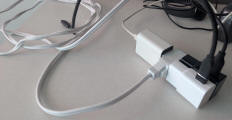
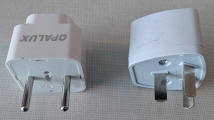
I have lightweight extension cord that I purchased in Mexico. It has 3 plugs on one end. I use it every day for charging moving power near the hotel room desk. I only needed one convertor for Peru and another for Argentina. It is simple, but I really like it.
I really like the Insta360 X5 camera. You need to have a camera running every single moment that you are riding the bike to keep the crooked cops honest (this is a story I will tell separately). If you put a 1 TB SD card in the X5 and run it at 5.7K+ it will record video for 27 hours. You need a USB power cable for it with the rubber rain door with the cable pass-through [ https://a.co/d/03CrRatj ]:
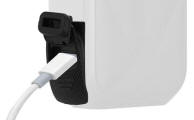
Make sure you have a lens replacement kit on hand, you will not be able to purchase once you leave the USA. Also, make sure you have a reliable mount. Anything with a stick will quickly fail. I have this [ https://a.co/d/0ekh8p0q ]:
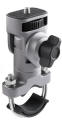
But, if I had a windshield it would not work.
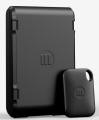
I have a [ Monimotor ] alarm. They say it does not work in South America (it has a cell phone in it), but it worked everywhere except for Nicaragua for me. And it brought me great peace of mind. However, it runs on AA-Lithium Ion batteries which are not possible to purchase in South America. I should have taken a years worth of batteries for the alarm, or purchased the one that connects to the bike.
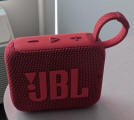
I bought a JBL GO4 speaker and use it all the time, every day, every mate stop, every evening in the hotel, at every construction delay and while sitting on the beach. I really like this speaker:
You need an inflator and a jump starter. I purchased a jump starter in Peru, the jump starter can also be used as an external power supply for your phone. Get a high quality inflator as you are going to use it every other day. Because I am an electrical engineer, I also absolutely have to have a voltmeter (it is like a doctor carrying a black bag.)
Battery Travel Note You are going to have a lot of lithium ion batteries and you can not leave them on the bike when you ship over the Darien gap or put them in your checked luggage. So, you are going to be hand carrying a lot of shit with batteries through airport security. It worked out fine for me, just be aware that it is an issue.
Phones and phone service: I highly recommend that you carry 2, provisioned phones. I carried a Google Pixel 8 and a Google Pixel 8 Pro. The camera in the Pixel 8 Pro is much better than any other traveler's camera that I encountered. The pictures are night and day better.
You need two phones because one will fail on the trip. You have to have a working cell phone at all times. You probably don't want to be provisioning a phone that you purchase at a local store.
I have Google Fi service on both my phones. It is FANTASTIC! It worked everywhere, in every single country. The problem is they only give you 90 days out of the country. So, I used one phone for 90 days, then enabled international travel on the second phone and used it for 90 days.
When the second phone ran out, I purchased a Claro Argentina SIM card with 15 GB and 30 days for $13 US. This lasted me until I got to Denver and Fi started working again. So, a local SIM card is about $0.80 US per gig. My 'work anywhere' simbase card is $20 per gig and does not have a local number. The travel eSIMs are about $5 per gig.
The problem with the eSIM travel services is they can be 20X as expensive as a local SIM and when you change countries, you throw away the remaining time and data. Unless you purchase the work anywhere cards which are 50 times more expensive.
Another issue is the eSIM's are typically contracted with the worst coverage partner in each country. In Columbia, Argentina and Chile you probably want Claro service. I said this in the blog: for what the travel eSIM companies charge your phone should work with every single carrier, then it would be a valuable service.
What was bad? I absolutely hate the Mosko luggage system I have. The strap fasteners failed, the bags are way too small and most importantly, the side bags are absolutely impossible to push into the carriers. So you end up unpacking the bags, often in the rain, putting the bags into the carriers, then reloading the bags. Every - Single - Morning. The pole bag is damaged by the buckles by design. And this luggage is just crazy expensive. Based on my experience, I would buy ANYTHING other than Mosko. Full stop. I am going to make a YouTube video about this to warn others.
I would only take USB chargers that are high power (60 watt) there is no reason to have less. I would carefully figure out what USB cables I needed for charging. There are some high power, multi-output chargers on Amazon that might allow you to charge all the electronics (2 phones, inflator, jump starter, X5, Osmo, JBL Speaker, hearing aid case) at once.
I had too much stuff. I probably did not need the tire changing tools (however, I literally may change a tire tomorrow morning on my way back home, and I used the big tire iron to uncrate my bike at the Denver airport. I was happy to have it.
What was I missing? When I left I assumed I could get gloves, clothes (like socks, shirts, pants and interiors) anywhere along the way. Well, I wear 3 or 4 XL gloves and am big. So, I would take only the highest quality clothes and assume they will be all you have for the entire trip.
Mid trip in Columbia I realized that if someone stole my helmet, I would NEVER find a XXL helmet in South America and it might take an entire month to have one delivered, so I bought a chain lock in Bogota.
I was missing feeler gauges. I needed higher quality tools.
Deaf Travel Notes
Hearing Aid notes: I am deaf. I wear hearing aids. They are okay. But I ran out of the little white filter things in the first month. I should have been carrying a years supply as they are impossible to get anywhere.
The only place where hearing aids are available is Chile. You will not meet anyone with aids in any other country. Most people have never seen a hearing aid and will not know what they are, they will assume you are listening to music.
You can't mix aids with a helmet because they will rub off when you pull the helmet down. So, if you want to have a conversation, you need to take off the helmet and put in the hearing aids, and wait for them to turn on (15 seconds).
One day it was raining really hard and the charging case was in my vest and it got filled with water. I was unable to charge the hearing aids. A month later I remembered that I am an electrical engineer, so I went to a cell phone repair shop and asked if I could pay $20 to use their tools. I got one of the charging holes to work! But, to charge both aids, I have to charge one, then manually turn it off with the button (difficult), then put the second aid in and charge it. But, before I disconnect the case from power, I have to remove the second aid and manually turn it off. Then since the case does not really work, you have to manually turn them on with the button which takes an extra 15 seconds! It is too much trouble, so I have only used them at border crossings where I need to be able to hear instructions.
I hate to suggest this, but I recommend traveling with two sets of aids.
Streets: If you are deaf, you already know this: with and without aids you don't have good spatial hearing. So even if you can hear or feel an approaching car, you can't reliably tell where it is coming from. Most of the streets in Latin America are one way, but there are people driving the wrong way everywhere. Every single moment you are off a curb on a street you must continuously scan in all directions or you will get run over and it will be your fault. Unlike the USA, cars have the right of way at all times on all streets. If you are deaf, you need to be extremely careful. I have had a lot of close calls on this trip. This can be partially mitigated by crossing with others.
Foreign language: Since you can have a conversation in your native language in quite environments without aids you should be treated as a hearing individual at all times, right? Hearing people do not realize that in a quiet room you may only decipher 20% of their words and are using visual cues (lip reading) and intense mental processing to decipher. Without your aids you will not be able to decipher a foreign language at all because you will only have a 5% word recognition rate. With aids I have found it best to switch the aids to forward mode, no filter and full volume. This makes the background noise maddening, but you stand a chance. Without aids, I think it is best to just say 'soy sordo' and give up. Pull out your phone and use 'Google Translate' or 'Live Transcribe'.
WhatsApp Voice Messages: 100% of messaging and phone calls are done in the WhatsApp application. Voice messaging is very, very popular. This is the feature where a 10 to 60 second recording is made and sent, then you play it back and hear the senders voice message. In another world, people would not send deaf people voice messages, right? You can have a live telephone conversation with them because you can stop the other person and ask them to repeat or say what you think they said back to them. Usually this is enough social cue for them to speak slowly and clearly and you can have a conversation on the phone. But, these voice messages are rattled off, typically in a noisy environment and there is no way to decipher them.
On my phone there is a button called 'Live Caption'. Turn it on, it will listen to the message and display the text equivalent on the screen. It bothers me that my phone can understand better than I can.
What is the best motorcycle for this trip? It was very important to me that I can lift the bike when I drop it. I drop quite often and sometimes there is no one to help. So light weight is good. But, I sure wish I had a windshield, 4-way flashers, a gas gauge, a tachometer, a 6th gear, ABS for safety, EFI for better mileage and more power, more luggage so I could take more stuff. Of course, if I had ABS it would be bad on gravel. And EFI might not be great with sketchy bottled gas. So, for this trip, the DR650 was amazing. Parts are really difficult. The smartest bike might be a Chinese sub 200 cc. There are millions of them from Mexico south, millions.
Insurance, what if you a hurt? I have [ Global Rescue ] extraction insurance. If something bad happens, I can get pulled back to the USA where Medicare might cover the issue.
How much does it cost to travel like this? Less than you think. I believe that it would be possible to completely cover the cost of travel with my Social Security if I scrimped a bit. I still work a few hours per day and make a small salary. Combined with SSI I actually returned with more money than I left with.